
AI Outfit Changer Before and After: Three Garment Tests and Their Limits
See actual model outputs for a blazer, jeans and cardigan outfit, using one synthetic adult. Learn what changed and where the results fell short.
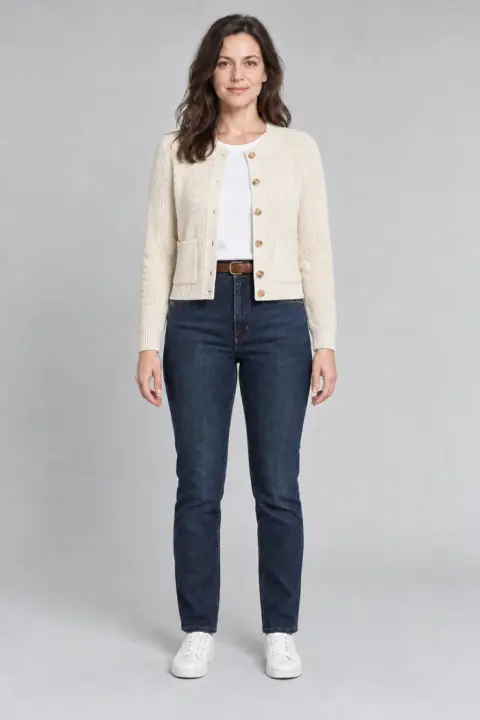
A useful AI clothes changer example shows the original person, the clothing reference and the generated result. That gives you a way to inspect the transformation rather than judging one attractive final picture.
This article presents three Essential sample outputs used by AI Outfit Changer: a pinstripe blazer, indigo jeans and a cardigan outfit. All use the same fictional adult. The person and garment inputs are synthetic, and the results are actual model outputs from a small pre-launch evaluation on September 23, 2026.
The evaluation recorded eight supplier generation tasks across Free and Essential modes, including earlier and corrected outfit attempts. It was not a multi-tool comparison or a test of many different people. The three examples below illustrate specific results; they do not establish a general success rate.
The common person input
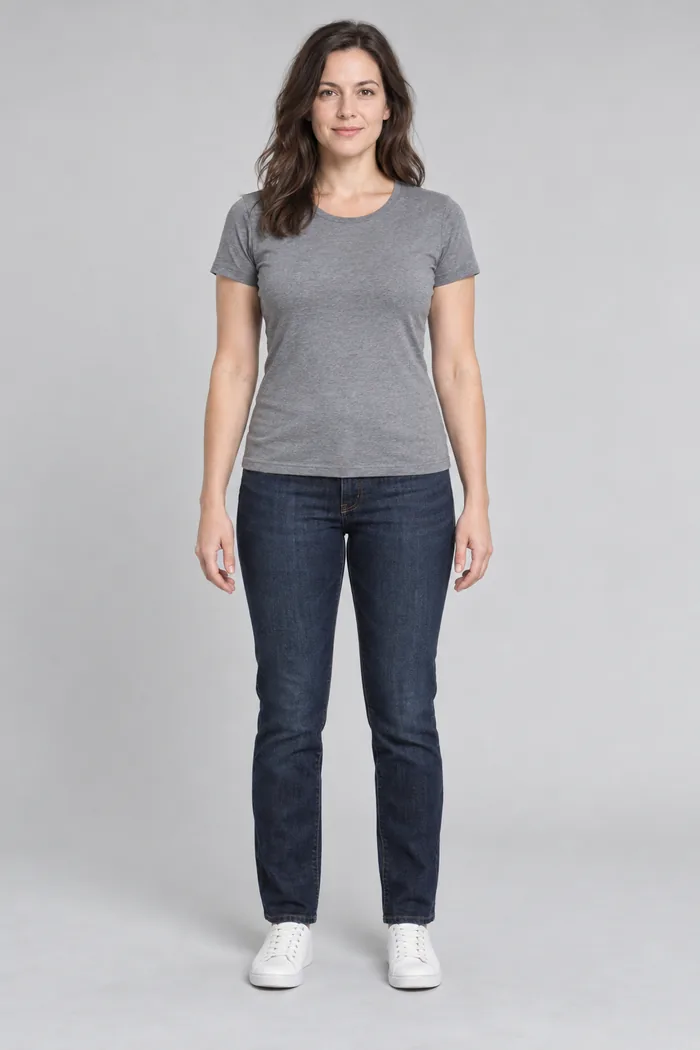
Using the same person image makes changes in clothing and non-target items easier to inspect. It also limits the scope: one front-facing synthetic subject cannot represent different bodies, lighting conditions, poses or occlusions.
Test 1: Pinstripe blazer
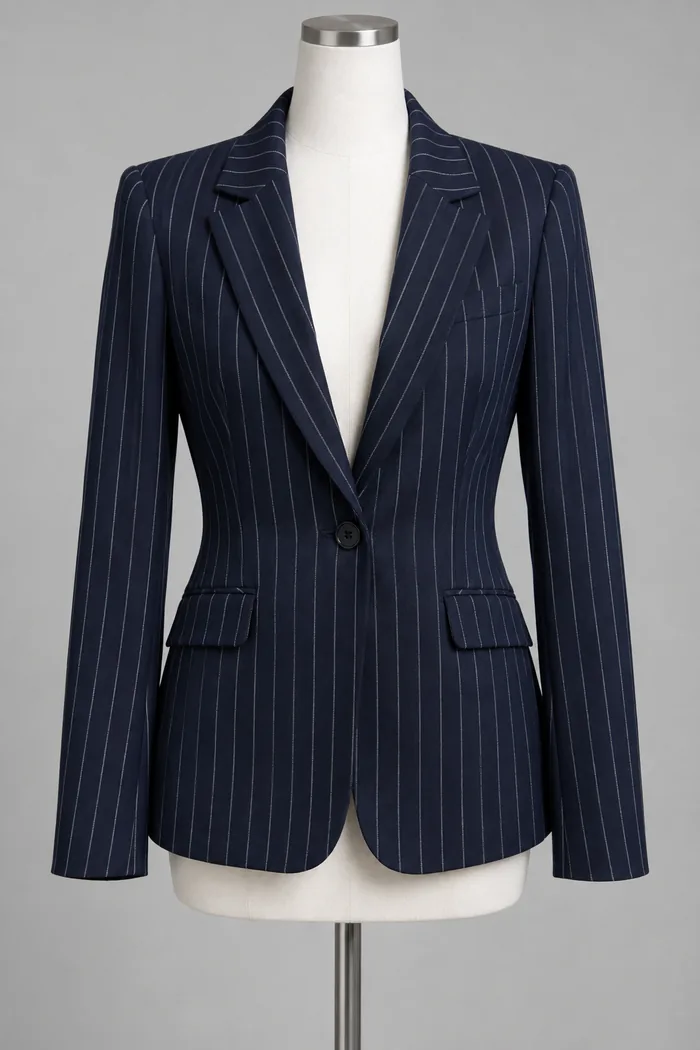
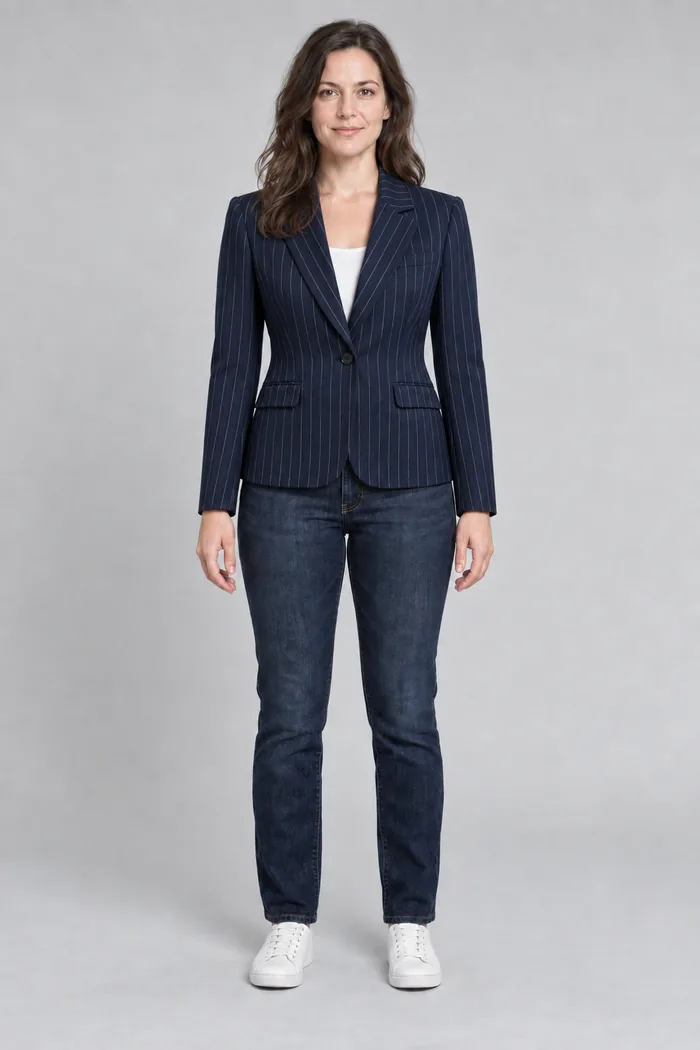
The blazer outline and narrow stripe pattern remain visible in the result. However, the neckline differs from the flat garment reference. That distinction matters if you are trying to judge the appearance of a specific product.
Review the collar, lapels, fastening and sleeve edges together with the overall style. A plausible outfit can contain a changed garment detail. Visual realism and exact reference fidelity are separate checks.
Test 2: Indigo jeans
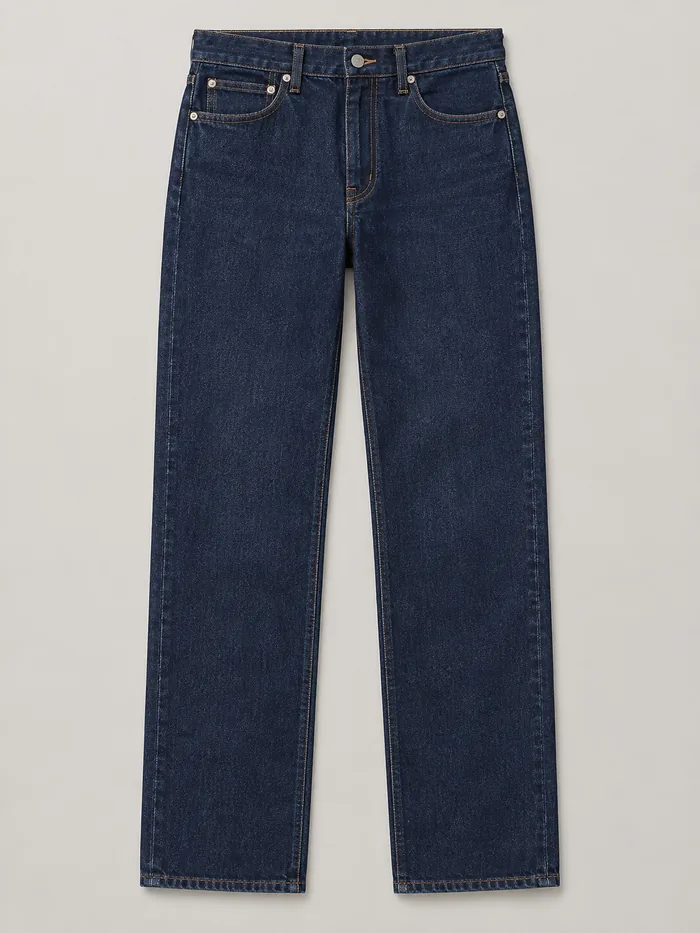
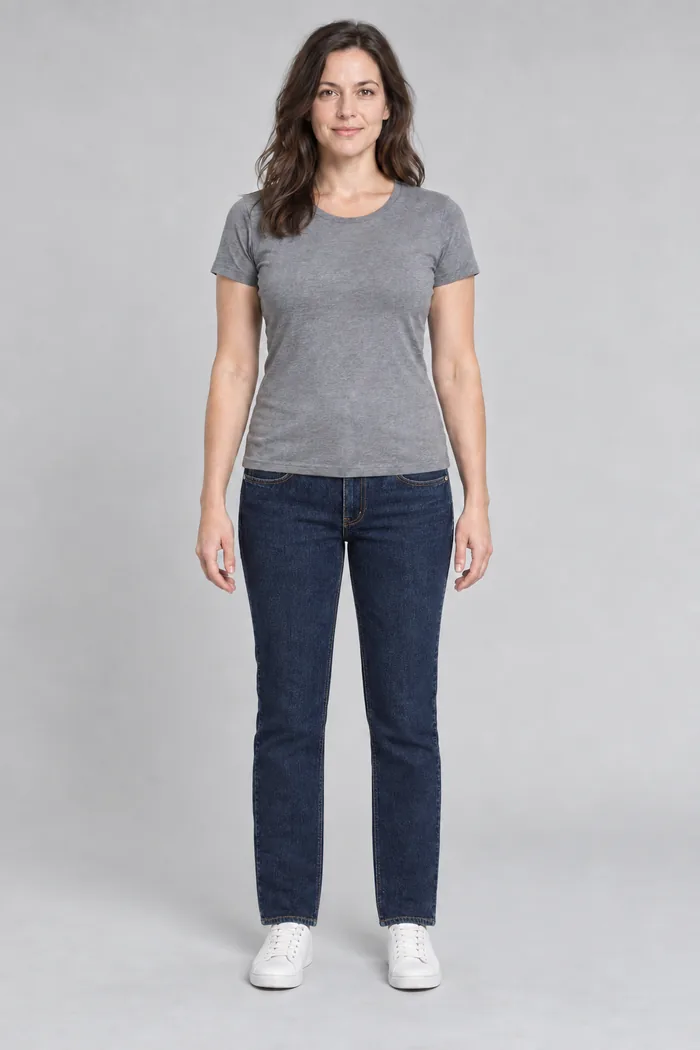
The jeans change while the original top and shoes remain in this example. It illustrates a lower-body garment change without an obvious replacement of those other items.
Inspect seams, leg boundaries and the transition at the waist. The generated silhouette is a visual interpretation. It does not measure waist size, inseam or stretch and cannot establish whether these jeans would fit a real person.
Test 3: Cardigan outfit
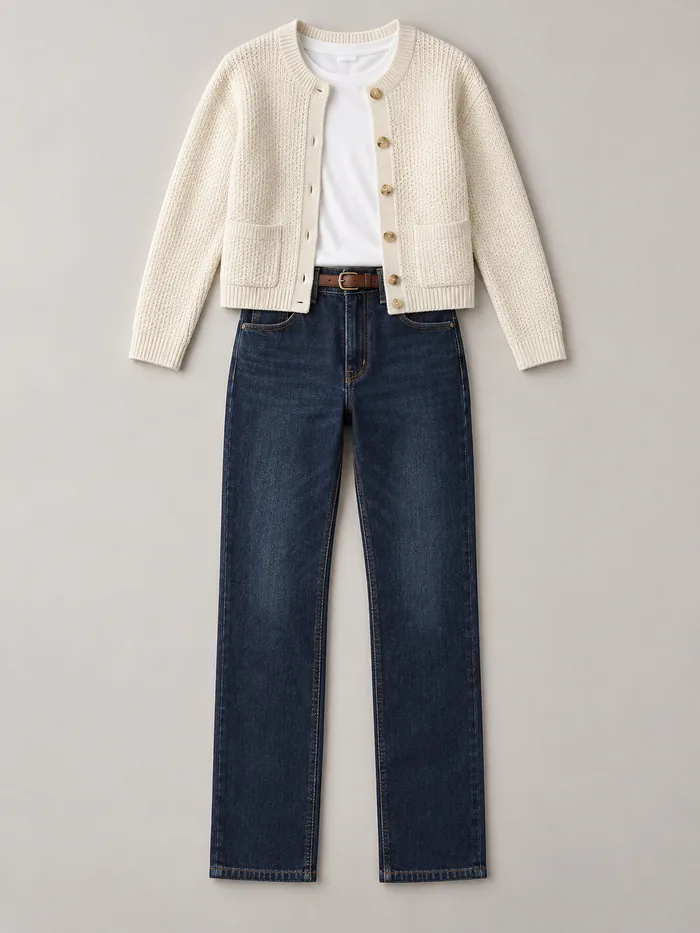
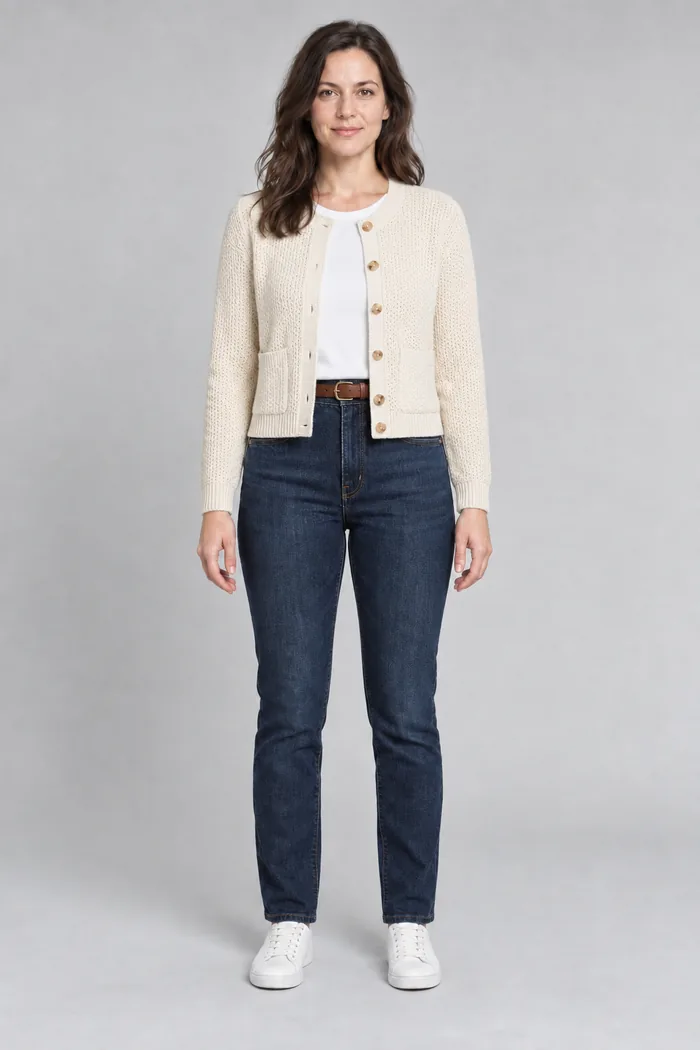
The corrected example shows the cardigan outfit, keeps the white shoes and does not add a bag. Earlier attempts in the recorded evaluation had changed an unrequested item: one Free result changed the shoes, and an Essential result introduced a shoulder bag.
Those failures show why reviewing only the new clothes is insufficient. An outfit can appear convincing while the model changes an accessory or invents something outside the reference. The corrected sample is one observed outcome, not evidence that the issue has been eliminated for every input.
A checklist for judging a try-on result
| Check | Question |
|---|---|
| Person | Does the face, hair, pose and body still resemble the input? |
| Garment | Are the colour, pattern, shape and visible details consistent with the reference? |
| Fabric | Do folds, texture and light look plausible? |
| Boundaries | Are the neckline, sleeves, hair and hands coherent? |
| Surroundings | Have shoes, accessories or background changed unexpectedly? |
These questions help you judge a particular image. A reliable comparison between products would require shared inputs, defined settings, repeated generations and an explicit evaluation method.
What these examples cannot prove
The displayed WebP files are website presentation assets, not a specification of the original download dimensions. These historical supplier tests also do not establish current production processing time or end-to-end reliability.
They do show inputs, outputs and documented limitations for specific garment changes. Use that evidence to decide whether an outfit preview suits your task, then evaluate your own result against your own references.
Try the AI Outfit Changer clothes-swap workflow with a person photo and garment image you have permission to use. Read the free-mode rules first, and inspect both the clothing and the rest of the image before sharing it.